
The Most Common Podcast Launch Mistakes & How to Avoid Them
The most common podcast launch mistakes include launching without a defined niche, neglecting audio quality, skipping show notes and SEO, publishing inconsistently, ignoring cover art, failing to define the business model, recording without considering listener experience, over-investing in equipment too early, and not marketing the podcast after publishing. Avoiding these pitfalls before launch creates the foundation for sustainable growth. Successful podcasts treat launch preparation as seriously as content creation itself.
Starting a podcast feels straightforward until you actually do it. The idea is clear, the topic feels exciting, and the vision of a growing audience feels within reach.
This is the experience of so many new podcasters, and it's rarely down to a lack of effort or passion. It's down to a handful of avoidable mistakes that most people make before they've had the chance to learn better.
Understanding the most common podcast launch mistakes before you launch is one of the most valuable things you can do for your podcast journey, and it's exactly what this article is here to help with.
Table of Contents
Launching Without a Defined Niche
One of the most damaging podcasting mistakes a new show can make is launching without a clearly defined niche. It's tempting to keep the topic broad in the hope of attracting more listeners, but the opposite tends to happen.
A podcast about "business and lifestyle” or “mindset in marketing" gives potential listeners no clear reason to choose it over the thousands of other shows already covering those areas.
An undefined niche creates a show that belongs to no one in particular. Podcasting rewards specificity. The more clearly a podcast speaks to a specific audience, the more likely that audience is to find it, connect with it, and stay with it.
A defined niche also makes every decision easier, like what to talk about each episode, who to invite as a guest, how to market the show, and where to find potential listeners who are already looking for exactly what you're creating.
Before recording a single episode, it's worth being able to describe your ideal listener in specific terms. Not just "entrepreneurs" or "fitness enthusiasts," but the particular kind of person within that world whose problem your podcast exists to solve. That clarity is the foundation on which everything else is built.
Neglecting Audio Quality From the Start
Poor audio quality is one of the most common podcasting mistakes and one of the most costly. Listeners are remarkably patient with imperfect ideas but remarkably impatient with audio that makes them work hard to hear what's being said.
Background noise, muffled recording, heavy echo, and inconsistent levels all lead to the same outcome: people stop listening.
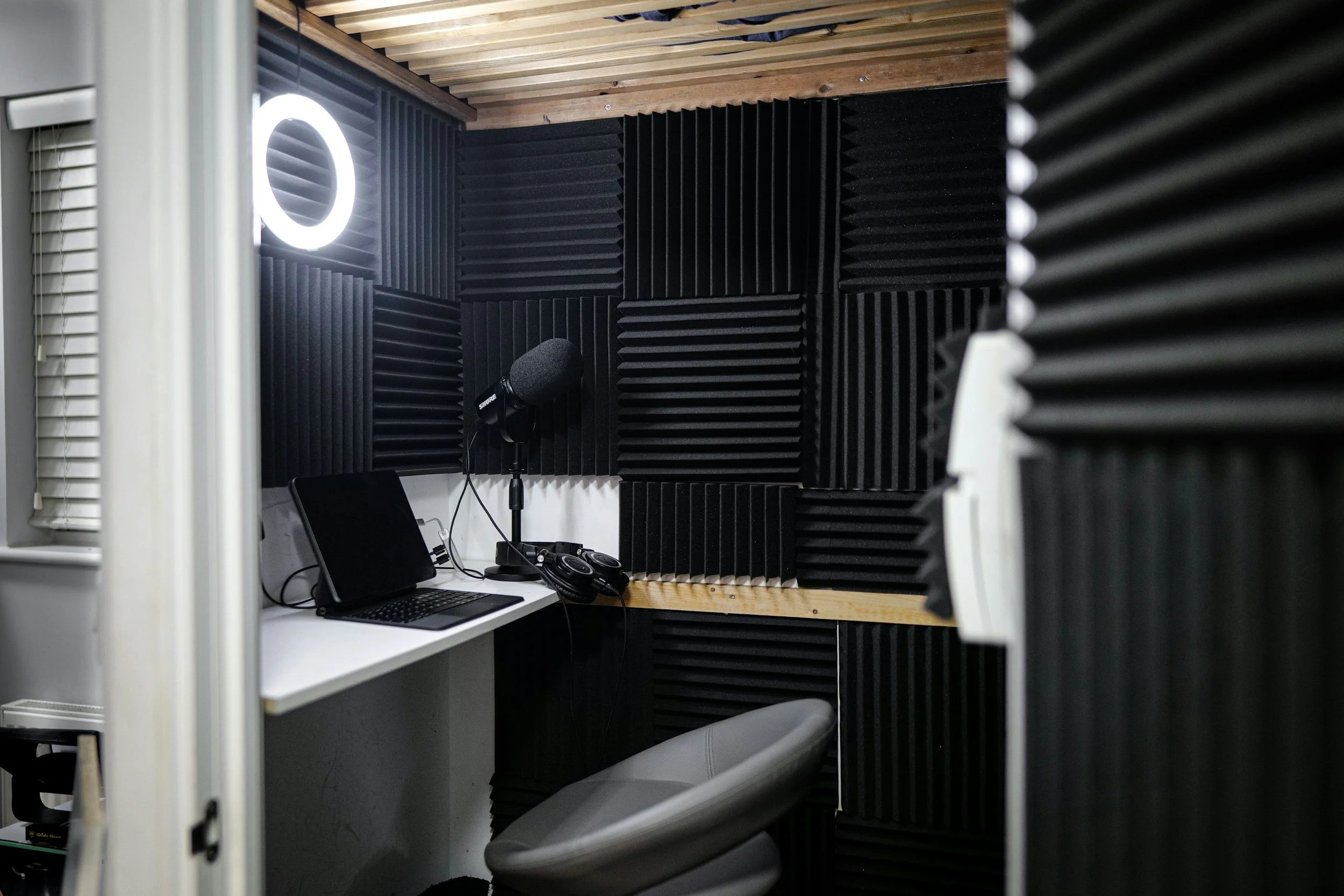
The good news is that good audio quality doesn't require a professional studio. It requires the right equipment and a considered recording environment.
A reliable USB microphone, a quiet room with soft furnishings, and some basic attention to microphone positioning will produce audio quality that most listeners find perfectly comfortable to hear.
The Blue Yeti is a well-regarded starting point for podcasters at this stage. A USB microphone that delivers clean, consistent audio without the complexity of a full recording chain, and one that gives a new podcast a professional sound from the first episode.
The mistake most new podcasters make is assuming they'll fix the audio quality later, once the show has found its footing. In practice, poor audio quality prevents the show from finding its footing in the first place.
Listeners who encounter a recording that fatigues the ear don't come back. Addressing audio from the beginning, rather than retrofitting it later, is one of the most important decisions a new podcaster can make.
Skipping Show Notes and Podcast SEO
Many podcasters treat show notes as an afterthought, a brief paragraph dashed off after the episode is recorded and published. This is one of the most overlooked podcasting mistakes in the launch phase, and it has a direct impact on growth.
Show notes are one of the primary ways a podcast becomes discoverable through search. Without them, a podcast relies entirely on word of mouth and platform recommendations to reach new ears. With well-written show notes that incorporate thoughtful podcast SEO, each episode becomes a piece of searchable content that can drive growth long after the publish date.
Search engine optimization for podcasts works similarly to how it works for blog content. The episode title, the description, and the show notes all represent opportunities to use language that potential listeners are already searching for.
A podcast episode that answers a specific question, and titles and describes itself accordingly, stands a far better chance of surfacing in a search engine than one with a vague or clever title that tells the algorithm nothing useful.
This doesn't mean writing show notes that feel mechanical or keyword-heavy. It means being clear, descriptive, and deliberate about the language used to represent each episode to the world.
Search engine optimization is not separate from good writing. When done well, the two are the same thing.
Inconsistent Publishing Without a Clear Schedule
One of the most common podcasting mistakes is launching with enthusiasm and then publishing sporadically. The first few podcast episodes arrive on time, then the gap between episodes grows, and the audience that was beginning to build quietly drifts away.
Consistency is the mechanism through which a podcast builds trust. An audience that knows a new episode will arrive every Tuesday develops a habit around listening. That habit is one of the most valuable things a podcast can cultivate, and it is almost impossible to build without a reliable publishing schedule.
This doesn't mean committing to more episodes than is sustainable.
A weekly episode is ideal for growth, but a fortnightly episode published without fail is far more valuable than a weekly episode published whenever life allows.
The mistake is not choosing the wrong frequency, it's choosing a frequency without accounting for the full workload of recording, editing, and publishing each episode.
Before launch, it's worth recording several podcast episodes in advance so the publishing schedule has a buffer.
This protects against the inevitable weeks where recording time runs short and prevents the kind of inconsistency that quietly kills early momentum.
Ignoring Cover Art and Visual Presentation
A podcast lives inside an audio platform, but listeners discover it visually. Cover art is the first thing a potential listener sees when browsing Apple Podcasts or any other directory, and it does the same job a book cover does: it either earns attention or loses it in under a second.
One of the most avoidable podcasting mistakes is treating cover art as a minor detail. Poor cover art signals a lack of investment in the show, even if the content inside is excellent. It creates a first impression that works against the podcast before a single word has been heard.
Good cover art doesn't need to be complex. It needs to be clear, legible at small sizes, visually consistent with the brand of the show, and instantly communicative of what the podcast is about. The show name should be readable as a thumbnail. The design should feel intentional rather than improvised.
For a podcast attached to a business, a YouTube channel, or a broader content brand, visual consistency across platforms matters too. Cover art that feels disconnected from the rest of a brand's visual identity creates a fragmented impression that undermines trust.
Failing to Define the Business Model Early
Many podcasters start a podcast with a vague sense that money will follow if the audience grows large enough.
This is one of the more costly podcasting mistakes to make, not because monetization should come first, but because launching without any sense of how the podcast connects to a business model means building without direction.
A podcast doesn't need to generate direct revenue immediately to serve a commercial purpose. It might exist to build authority, attract potential guests who become collaborators, drive listeners toward a service, product, or online course, or establish a brand within a specific niche.
Each of these represents a different kind of value, and each one shapes how the podcast should be structured, marketed, and measured.
Understanding the purpose of the podcast from the beginning makes it easier to create content that serves that purpose.
It also prevents the common experience of growing an audience that never converts into anything meaningful, because the connection between the podcast and the wider business was never clearly established.
Recording Without Thinking About the Listener's Experience
There's a particular podcasting mistake that happens in the recording itself, and it's subtle enough that many podcasters don't notice it until they listen back.
It's the tendency to create for yourself rather than for the person on the other side.
This includes talking too much about your own experience without connecting it to the listener's situation, using insider language that a new audience won't recognize, spending the first several minutes of each episode on extended introductions, or recording without a clear structure. These are all ways of creating content that feels good to produce but doesn't hold attention when listened to.
The most effective podcast episodes are built around the ideal listener's experience of them.
What does that person need to hear?
Where are they when they're listening?
What do they hope to take away?
Recording with those questions in mind produces episodes that feel focused, purposeful, and worth recommending to friends.
For podcast episodes that involve remote guests or co-hosts, the quality of the recording itself becomes even more important. Riverside.fm is built specifically for this, recording each participant locally at full fidelity rather than depending on a compressed internet connection, which means the final audio holds up regardless of where contributors are in the world.
For a podcast where conversation is central to the format, that kind of infrastructure removes one of the most common sources of audio inconsistency before it becomes a problem.
Over-Investing in Equipment Before Proving the Concept
There's a version of this mistake that goes in the other direction from poor audio quality: spending money on equipment before the podcast has demonstrated any traction.
High-end microphones, acoustic panels, professional editing software, and premium hosting all represent real costs, and committing to them before the concept is proven can create a financial pressure that makes it harder to enjoy the creative process.
The most important thing a new podcast can do is publish, listen, improve, and publish again. That process doesn't require expensive tools.
It requires consistency and honest self-assessment. A free or low-cost recording setup that produces reasonably clean audio is entirely sufficient for the early episodes where the real work is finding the voice of the show, understanding the audience, and building the discipline to publish on schedule.
Equipment becomes a meaningful investment once the podcast has proven it deserves one. Before that point, it's a way of feeling productive without doing the harder work of actually launching and growing.
Not Marketing the Podcast After Publishing
Publishing an episode and waiting for listeners to find it is one of the most persistent podcasting mistakes, and one of the easiest to fall into.
The idea that good content finds its own audience is appealing, but it isn't how podcasting works in practice, especially not for a new show without an existing audience.
Marketing a podcast doesn't require a large budget or a complicated strategy. It starts with sharing each episode across social media in a way that gives potential listeners a reason to click.
It includes writing show notes that work for search engines as well as readers. It means telling friends, reaching out to communities where the ideal listener already spends time, and looking for opportunities to appear on other podcasts where a relevant audience already exists.
Each episode represents a piece of content that can be repurposed, shared, and promoted across multiple platforms.
The podcast itself is the foundation, but the marketing that surrounds it is what introduces it to people who don't yet know it exists.
Final Thoughts
The most common podcast launch mistakes are not the result of carelessness. They are the result of enthusiasm outpacing preparation, which is an entirely understandable place to be at the start of a podcast journey.
Understanding them in advance means the energy you bring to launching your show can be directed toward the things that actually drive growth: A defined niche, consistent audio quality, deliberate publishing, and marketing that puts the podcast in front of the right audience.
Podcasting success is built gradually, episode by episode. The foundations laid at launch either support that growth or quietly work against it.
Getting them right from the beginning gives your show the best possible chance of becoming something your listeners can't imagine their week without.
Work With Red 11 Media
If you're planning a podcast launch and want expert support with production, strategy, or audio quality, Red 11 Media is here to help.
From recording setup and editing to full podcast management, our team works with creators and businesses who are serious about building an audience that lasts.
Frequently Asked Questions
-
The top mistakes almost always come back to an undefined niche or one that is too broad to mean anything to a specific audience. Many new podcasters make the understandable decision to keep their niche wide, hoping to attract how many people they can rather than committing to a smaller, more defined group. In practice, an undefined niche produces a show that feels unfocused to listeners and invisible to search engines. The word that comes up most often when successful podcasters reflect on their early mistakes is "broad." Getting specific about the niche before recording a single episode is one of the most valuable things a new podcaster can do, and it costs nothing — it is entirely free to refine your positioning before you launch.
-
Social media is worth the effort, but only when it is focused rather than scattered across all the things at once. Trying to maintain a presence on every platform simultaneously is one of the more draining mistakes new podcasters make, and it pulls focus away from the recording and publishing consistency that actually drives growth. A better approach is to identify where the ideal audience already spends time and post there with intention. Short clips, audiograms, or a compelling quote from each episode give potential listeners a reason to click without requiring an enormous time investment. Social media works best as a way to extend the conversation around each episode, not replace the work of making good ones.
-
Podcasting genuinely can be fun, and for many creators it starts that way — the recording feels exciting, the conversation flows naturally, and the idea of building an audience feels inspiring. The point at which it starts to feel like a chore is usually when the effort required outpaces the results visible in the early weeks. This is where most people lose momentum. The podcasters who push through that phase and come out the other side consistently report that the fun returns once the process becomes familiar and the audience starts to grow. Building in episodes you are genuinely excited to record — conversations with friends, topics that feel inspired, formats that stretch your voice — helps sustain energy through the harder stretches.
-
A pretty good website is far more valuable than most new podcasters give it credit for, and the absence of one is a mistake that compounds quietly over time. While audio platforms handle distribution, a website gives the podcast a home that the creator controls — somewhere to post show notes, build an email list, and accumulate search engine value that directories cannot provide. It also gives potential listeners and potential guests a professional point of reference that builds trust before they have heard a single episode. A simple, well-organised website does not need to be elaborate to be effective, and the word "free" applies here too — several reliable platforms allow podcasters to build a functional web presence at no cost while the show is finding its feet.
-
Running out of things to talk about is a fear many new podcasters carry into their first episodes, but in practice the more common problem is the opposite — having too many ideas and not enough focus to turn them into structured, useful episodes. Listening to the audience is the most reliable source of fresh content. Comments, messages, questions from listeners, and conversations that come up repeatedly in the niche all point toward what the audience actually wants to hear more of. Other podcasts in the same niche can be a useful reference point too, not to replicate what they cover but to identify the gaps — the conversations that are not being had, the angles that have not been explored, the specific questions the ideal listener is still looking for answers to.
-
Yes, and understanding this early reframes the entire approach to growth. A podcast does not need tens of thousands of listeners to generate money — it needs a clearly defined, engaged audience that trusts the show and the person behind it. A focused niche with a loyal few hundred listeners can be more commercially valuable than a broad show with thousands of passive ones, because that audience is specific enough to attract relevant sponsors, convert into clients for a service, or generate more downloads per episode from people who actively seek the show out. The mistake most podcasters make is waiting until the audience is large before thinking about how the podcast connects to income. Starting that conversation early, even if the answers evolve over time, leads to a more intentional and ultimately more sustainable show.

Red 11 Media is an educational platform and creative studio focused on driving growth online through strategic content creation. We help creators, brands, and businesses understand how to build sustainable audiences across YouTube, podcasting, and long-form digital content.