4 Riverside Features That Feel Like Cheating
Riverside has four standout features that genuinely change podcast production. Remote recording captures up to 10 participants locally on their own devices, eliminating internet quality issues. iPhone recording lets creators schedule, record, and edit entire shows from their phone using the free Riverside app. AI Shorts generates short-form clips automatically from raw recordings rather than finished videos.
Multistreaming broadcasts live to YouTube, TikTok, Instagram, and other platforms simultaneously. Together they remove most of the traditional barriers to professional podcast production.
Ever wondered how to record pro-grade content without a studio? Podcasting in 2026 is easier than it has ever been, and Riverside is a big reason why. If you haven't explored the platform lately, here are four features that might just make you feel like you're getting away with something.
Whether you're just starting your podcast or looking to level up your production, Riverside makes it surprisingly simple. No expensive gear, no clunky syncing, no complicated setup.
Table of Contents
Remote Podcasting
Remote podcasting has been around since the early days of the medium, but for a long time, it was a logistical headache. Everyone on the show needed their own recording equipment and software. You had to record a scratch track just to sync everything in post, and then you still had to deal with audio drift on top of it. Bringing guests in remotely made all of that worse.
Riverside has eliminated most of those headaches. It supports up to 10 participants on a single recording, and nobody needs specialized equipment to join. Riverside uses local recording, meaning each participant's audio is captured directly on their own device rather than over the internet, so your quality isn't at the mercy of anyone's Wi-Fi connection. This means dropped frames or internet interruptions don't ruin a take. Once the session is over, those files upload and sync automatically, so everything lines up without hours of manual work.
Riverside vs Zoom
Compared to Zoom, Riverside isn't even close. Guests don't need an account to join. They simply click a link and they're in, which removes a surprising amount of friction from the recording process.
Recording quality is also meaningfully higher; where Zoom compresses audio and video to prioritize a smooth live call experience, Riverside records each participant locally and uploads the high-quality files afterward, so you're never at the mercy of a shaky internet connection. This even extends to mobile: iPhone audio recording through Riverside captures studio-grade quality directly from a guest's phone, something Zoom was never designed to do.
And that gets at the bigger picture: Riverside is built specifically for podcasting in a way that Zoom simply isn't. From the clean guest interface to the separate audio tracks, the transcript-based editor, and the seamless Riverside podcast recording workflow, every feature exists to serve the creator. Zoom is a meeting tool that podcasters have repurposed out of convenience. Riverside is what you use when you're ready to stop compromising on quality.
Recording With an iPhone
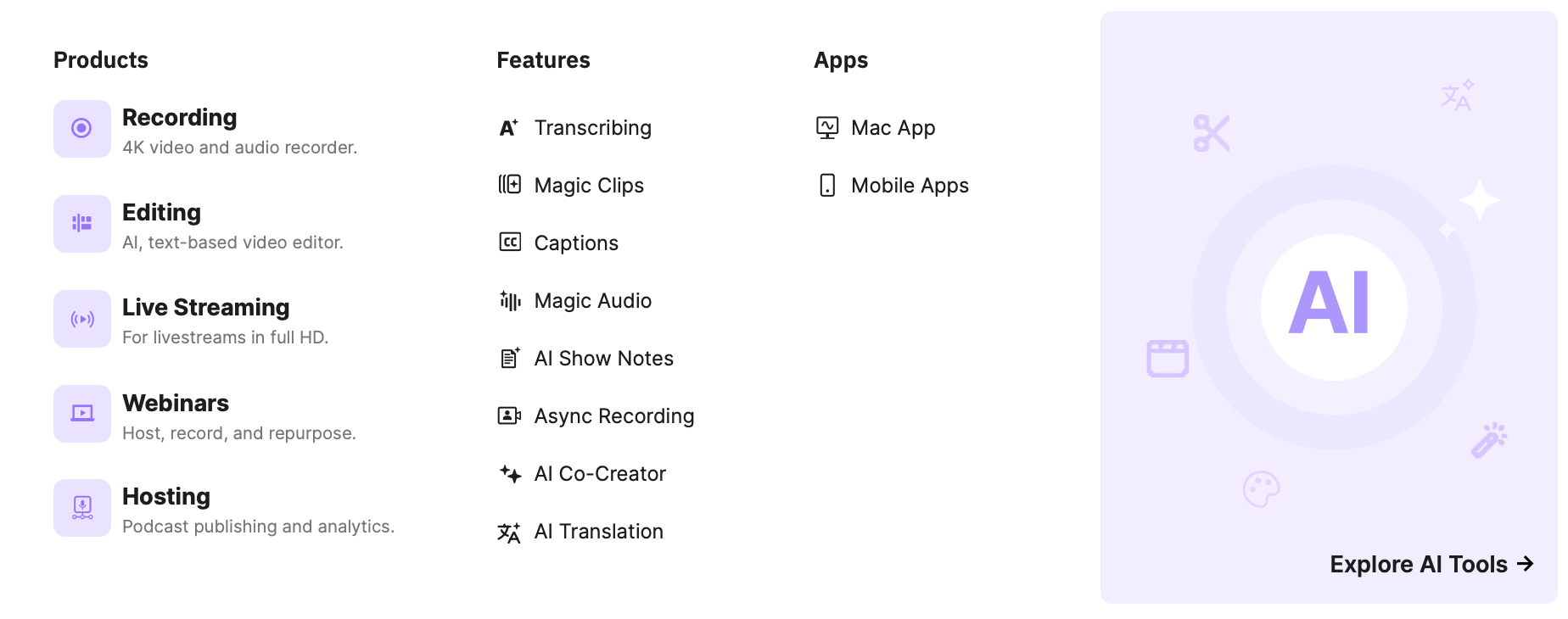
You don't need a dedicated recording setup to start a podcast with Riverside. All you need is your iPhone. Through the Riverside app, you can schedule, record, and edit your show entirely from your phone, which would have been unthinkable just a few years ago.
A few honest caveats are worth mentioning here. Editing on your iPhone is slower than working on a computer, and it won't match the precision or flexibility of professional desktop software. Recording on a Shure SM7B will still outperform any phone microphone. But for someone who wants to explore podcasting without a significant upfront investment, the iPhone workflow opens a door that used to be closed.
It also makes bringing in guests much easier. Anyone can download the Riverside app for free, accept an invite from you, and be ready to record. No complicated setup, no tech-savvy required.
Editing on the phone uses Riverside's text-based approach. You tap and drag over any words you want to cut, then hit delete. If you remove something by mistake, select the text and tap restore. You can also remove pauses and apply AI audio enhancement without leaving the app.
AI Shorts
After you finish recording, Riverside gets to work creating short-form clips for you automatically. There are other tools that do something similar, but Riverside has one advantage that matters: it works with your original, unedited files.
Most AI shorts tools have to work around your finished video; cutting between effects, transitions, background music, and everything else you added in post. Riverside skips all of that and pulls directly from the raw recording, which gives it much better material to work with and produces more natural, usable clips.
Once the shorts are generated, you have access to all of Riverside's editing tools to adjust and finalize them before they go out. You can also work with Co-Creator, Riverside's AI assistant, to pull clips based on your own knowledge of the episode. Type something like "help me create a short about [topic]" and Co-Creator will build one ready for any platform.
Multistreaming
If you want to reach your audience live, Riverside's multistreaming feature lets you broadcast to:
Facebook
X (Twitter)
YouTube
LinkedIn
Twitch
Instagram
TikTok
Riverside's live event platform
Streaming through free tools like OBS works, but it takes more setup and you often can't tell in the moment whether your stream is actually live. Riverside includes a live indicator directly in the interface so you know things are running as they should.
You also get the full functionality of remote podcasting while streaming live, which opens up options like hosting a live podcast, giving Patreon members a behind-the-scenes look, or connecting with your audience in real time while you record the show.
Final Thoughts
Riverside has quietly become one of the most powerful tools in a podcaster's kit, and the best part is that you don't need a studio or a big budget to take advantage of it. Whether you're just getting started or looking to level up your existing show, the platform meets you where you are. Give it a try and see how it improves your workflow!
-
Yes. All you need to get started is your iPhone or a computer with a browser. Riverside is built to work without specialized gear, which makes it a practical option for new podcasters and guests who aren't set up with a studio.
-
The biggest difference is quality and reliability. Riverside records audio and video locally on each participant's device rather than capturing a compressed stream over the internet, so the quality is significantly higher. Guests also don't need a Riverside account to join, which removes a barrier that Zoom doesn't.
-
After you finish recording, Riverside automatically generates short-form clips from your episode using AI. What sets it apart from similar tools is that it works from your original unedited files rather than your finished video, which produces cleaner, more usable clips. You can edit them inside Riverside or use the Co-Creator AI assistant to pull clips around specific topics from the episode.
-
Yes. Riverside's multistreaming feature lets you broadcast live to platforms like YouTube, Instagram, LinkedIn, and TikTok while recording your show simultaneously. It's a good option if you want to build an audience in real time or give supporters a live look at the recording process.

Red 11 Media is an educational platform and creative studio focused on driving growth online through strategic content creation. We help creators, brands, and businesses understand how to build sustainable audiences across YouTube, podcasting, and long-form digital content.