Opus Clip vs Klap: Which Is Better for Short-Form Video?
Opus Clip and Klap solve the same problem of turning long-form video into short-form clips, but with different priorities. Opus Clip leads on performance with AI Virality Scoring, analytics, and scalable workflows for content teams, starting at $29 monthly. Klap focuses on simplicity and visual polish with 4K exports, clean auto-reframing, and AI dubbing, also starting around $29 monthly. Choose Opus Clip for scaling and performance insights. Choose Klap for speed and clean output with minimal setup.
Short-form video is one of the most effective ways to grow an audience today. Platforms like TikTok, YouTube Shorts, and Instagram Reels reward consistency, but producing that volume of content is where most creators and teams run into roadblocks.
The bottleneck is not ideas. It’s editing.
Turning long-form content into short, engaging clips takes time, and manual workflows don’t scale easily. This is where finding the best AI tool for short-form video becomes a real competitive advantage, and why platforms like OpusClip and Klap have gained so much traction. Both platforms are designed to analyze long-form video, identify key moments, and convert them into short-form content ready for publishing.
This article breaks down Opus Clip vs Klap to determine which tool is better for short-form video based on pricing, features, workflow, and overall value.
Quick Verdict
Opus Clip and Klap solve the same problem, but they are built for different types of workflows.
Opus Clip is better for users who want deeper functionality, performance insights, and more control over how clips are selected and distributed.
Klap is better for users who prioritize simplicity, speed, and clean output with minimal setup.
For most teams, the decision comes down to whether the priority is scalability and features or speed and simplicity.
Choosing between Klap and Opus Clip for AI shorts? In this video, I break down the 5 key differences you NEED to know before signing up.
Table of Contents
Opus Clip vs Klap Pricing Comparison
Pricing is one of the first meaningful differences between Opus Clip and Klap. While both tools offer similar entry points, their pricing models work differently.
| Feature | Opus Clip | Klap |
|---|---|---|
| Pricing Model | Credit-based (1 credit = 1 minute) | Upload-based (video length limits) |
| Entry Plan | Starts at ~$29/month (~300 minutes) | Starts at ~$29/month (up to ~7.5 hours max potential) |
| Free Plan | Yes (limited, watermark) | Yes (limited, watermark) |
| Scaling | Linear and predictable | Depends on how videos are uploaded |
Opus Clip uses a credit-based system, where usage is tied directly to the number of minutes processed. This makes it easier to predict monthly usage, especially for teams producing content consistently.
Klap uses an upload-based model, where total output depends on how efficiently video length fits within plan limits. While this can offer more total processing time, it requires more awareness of how content is structured.
For most users, Opus Clip feels more predictable. Klap can provide more volume, but only when uploads are optimized.
Both AI video clipping tools offer annual plans that can reduce overall cost. However, usage limits still apply. Opus Clip is credit-based. Klap is upload-based. These limits affect how much content can be produced, so they should be considered before committing annually.
What Value Do They Say They Offer?
Both platforms aim to reduce the time required to create short-form video, but they emphasize different strengths.
Opus Clip
Opus Clip positions itself as a performance-focused AI clipping tool.
Its core value is centered on:
Identifying high-engagement moments automatically
Prioritizing clips using a built-in scoring system
Reducing decision-making during the editing process
The platform is designed to help users move quickly from long-form content to publish-ready clips while maintaining a consistent output.
Klap
Klap positions itself as a streamlined tool for creating clean, high-quality short-form videos.
Its core value is centered on:
Producing visually polished clips with minimal setup
Maintaining consistent framing and formatting
Offering a simpler, more direct workflow
Rather than focusing heavily on prediction or scoring, Klap emphasizes presentation and ease of use.
Best Features Overview
Both Opus Clip and Klap use AI to automate the process of turning long-form video into short-form content. While they share core functionality, their strengths show up in how those features are implemented.
Opus Clip: Best Features
1. AI Virality Scoring
Opus Clip includes a built-in scoring system that ranks clips based on their predicted performance. This helps prioritize which clips to publish first, especially when working with large volumes of content.
2. Automated Clip Selection
The platform analyzes transcripts and engagement signals to identify strong hooks and key moments. This reduces the need to manually review long videos.
3. Analytics and Performance Insights
Opus Clip provides feedback on clip performance, which can inform future content decisions. This is useful for teams focused on optimizing output over time.
4. Advanced Export Options
Support for features like XML exports allows integration into more advanced editing workflows when needed.
5. Scalable Workflow
The platform is designed to handle larger content pipelines, making it a strong option for teams publishing consistently across multiple platforms.
CTA: Explore Opus Clip
Klap: Best Features
1. 4K Video Export
Klap supports higher-resolution exports compared to most AI clipping tools. This is useful for brands that prioritize visual quality or repurpose content across platforms.
2. Clean Auto-Reframing
The platform keeps speakers centered and framed effectively in a vertical format. This creates a more polished viewing experience without manual adjustments.
3. Simple, Streamlined Interface
Klap’s workflow is straightforward. Users can generate clips quickly without navigating complex settings or features.
4. Caption Customization
Klap allows more control over how captions look, including styling, formatting, and visual consistency with brand guidelines.
5. AI Dubbing Capabilities
Built-in dubbing features make it easier to adapt content for different languages, expanding reach without additional tools.
At a high level:
Opus Clip leans toward functionality and performance tools
Klap leans toward output quality and simplicity
CTA: Explore Klap
Use code RED11MEDIA for 30% off your first purchase.
Best Features Comparison
While both tools offer similar core functionality, the differences become clearer when comparing how each platform performs across key areas.
AI Intelligence and Clip Selection
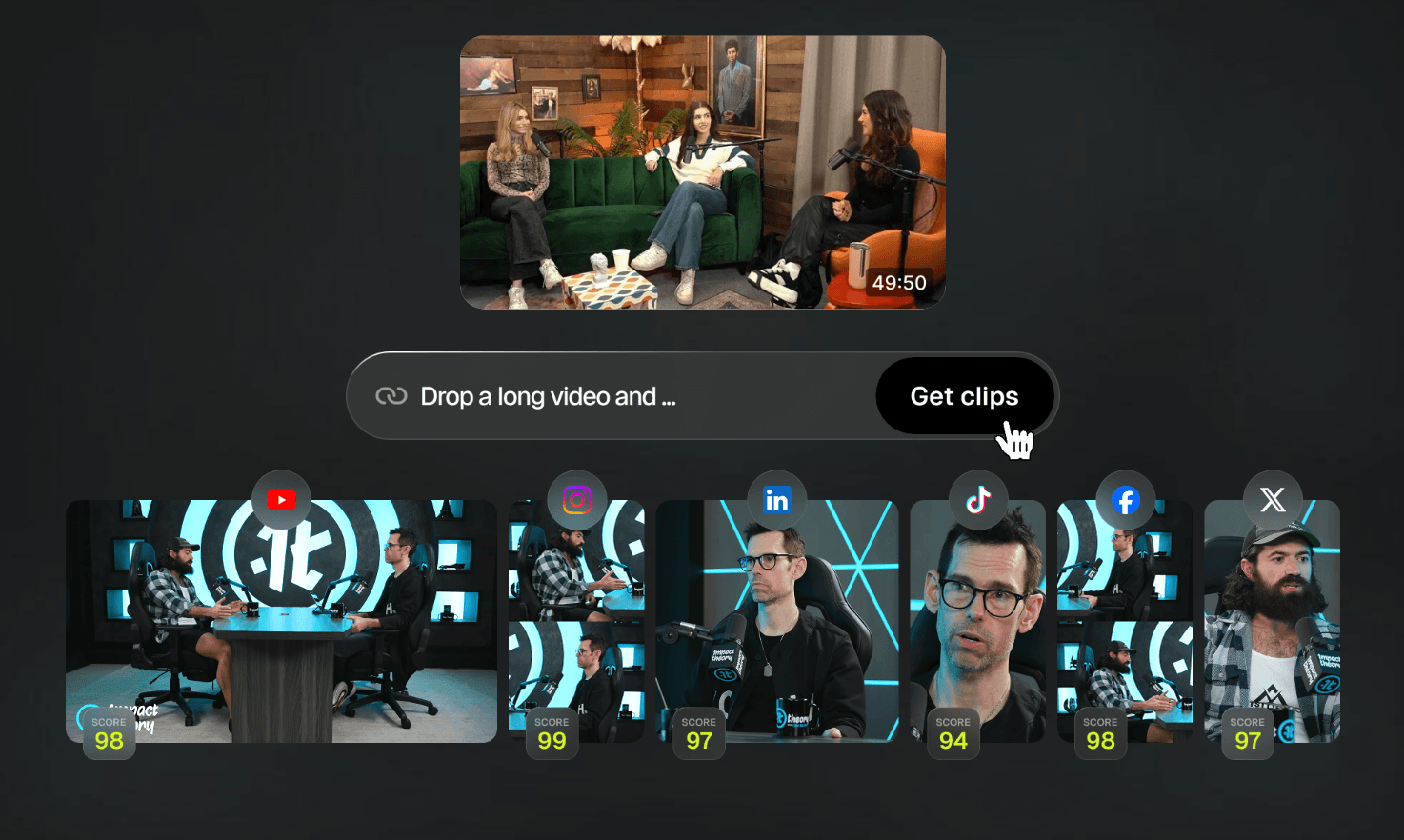
Opus Clip focuses on identifying high-engagement moments using AI trained around hooks, pacing, and audience retention signals. Its Virality Score helps rank clips, giving users a clearer sense of what to publish first.
Klap focuses more on topic segmentation and structured moments within a video. Instead of ranking clips, it aims to deliver clean, complete segments that require minimal adjustment.
Takeaway:
Opus Clip is more performance-driven. Klap is more structure-driven.
Speed and Workflow Efficiency
Opus Clip requires slightly more interaction due to its feature set, but still significantly reduces editing time compared to manual workflows. It is designed for users managing ongoing content pipelines.
Klap is faster to use out of the box. The interface is simpler, and clip generation feels more direct with fewer decisions required.
Takeaway:
Klap is faster for quick output. Opus Clip is better suited for ongoing, scaled workflows.
Output Quality and Resolution
Opus Clip exports in standard 1080p, which is sufficient for most social platforms.
Klap offers exports up to 4K, providing sharper visuals and more flexibility for repurposing content across different platforms.
Takeaway:
Klap has an advantage in visual quality and resolution.
Creative Control and Editing Flexibility
Opus Clip offers more advanced functionality, including deeper editing workflows and export options. It is better suited for users who want flexibility beyond the initial AI output.
Klap keeps editing simple. It allows adjustments but is designed to minimize time spent refining clips.
Takeaway:
Opus Clip provides more control. Klap prioritizes simplicity.
Advanced Features and Integrations
Opus Clip
Analytics and performance insights through clip scoring
XML export for extended workflows
More robust feature set overall
Klap
AI dubbing for multilingual content in some workflows
Strong caption styling options
Simpler overall toolset
Takeaway:
Opus Clip offers more performance-oriented features. Klap offers focused, practical features.
Overall Value Based on Use Case
Opus Clip is better for teams that need scalability, data, and flexibility.
Klap is better for users who want a fast, clean solution without complexity.
Who Is Each Program For?
Choosing between Opus Clip vs Klap depends less on features and more on how content is being produced and managed.
Opus Clip is Best For:
Opus Clip is better suited for users who are focused on scaling content production and optimizing performance over time.
It works well for:
Content teams managing multiple videos per week
Social media managers focused on growth and analytics
Creators who want guidance on which clips to publish
Workflows that require flexibility and deeper functionality
The platform is designed to support ongoing content systems rather than one-off video creation.
Klap is Best For:
Klap is better suited for users who want a faster, more straightforward workflow with less complexity.
It works well for:
Solo creators or small teams
Brands that prioritize visual consistency
Users who want minimal setup and quick output
Workflows that do not require advanced editing or analytics
The platform is designed to simplify the process and reduce decision-making.
Is It Worth the Money?
Both tools provide clear value when compared to manual editing workflows.
For most users, the time saved alone justifies the cost. Turning hours of editing into minutes allows more focus on content strategy, distribution, and growth.
That said, the value depends on how the tool is used.
Opus Clip is worth it when content volume is high, and there is a need for performance insights, prioritization, and flexibility.
Klap is worth it when the goal is to produce clean, high-quality clips quickly without spending time on detailed adjustments.
Neither platform is a complete replacement for human review. The best results still come from selecting strong clips, refining captions, and making small adjustments before publishing.
Final Decision: Which Is Better for Short-Form Video?
Opus Clip and Klap both solve the same core problem, turning long-form content into short-form video efficiently. The difference comes down to how much control, speed, and functionality are needed within that workflow.
Opus Clip is the stronger option for users who want more than basic clip generation. Its analytics, scoring system, and advanced features make it better suited for scaling content and optimizing performance over time.
Klap is the better option for users who want a simpler process. It delivers clean, high-quality clips with less setup, making it easier to move from upload to publishing quickly.
For most users, the decision is straightforward:
Choose Opus Clip if the goal is to scale content and leverage performance insights
Choose Klap if the goal is to simplify production and maintain clean output
Both tools provide meaningful time savings and improve consistency. The right choice depends on whether the priority is capability or simplicity.
-
Yes, both platforms offer free plans, though each comes with usage limits and watermarked exports. These are a good way to test the workflow before committing to a paid plan.
-
Klap is likely the better fit. Its simpler interface and faster clip generation mean less time spent navigating settings, making it ideal for solo creators who need quick, polished output with minimal setup.
-
Not entirely. While both tools dramatically cut down editing time, the best results still come from reviewing AI-selected clips, refining captions, and making small tweaks before publishing. Think of them as a powerful first pass, not a full replacement for human judgment.

Red 11 Media is an educational platform and creative studio focused on driving growth online through strategic content creation. We help creators, brands, and businesses understand how to build sustainable audiences across YouTube, podcasting, and long-form digital content.