Do Creators Still Need Blogs in 2026? A complete breakdown
Yes, creators still need blogs in 2026. The lazy blogs died, but the strategic ones are thriving. Unlike short-form social content with a 48-hour shelf life, a well-written blog post can drive organic traffic for years. Blogging builds long-term assets, feeds every other content channel, and creates the trust that converts to affiliate revenue and email signups. The shift requires depth, real experience, and content that AI search engines actively want to cite, rather than thin keyword-stuffed posts.
Some blogs are dead. Others are pulling in more traffic than ever.
If you've typed "Is blogging dead?" into a search bar recently, you're not alone. Between TikTok stealing attention, YouTube dominating how-tos, and AI summaries answering questions before you even click a link, it's fair to wonder if writing a 1,500-word blog post is a bit... 2015.
It's a valid question. Search interest in the word "blog" has dropped steadily over the past five years, according to HubSpot. Video is eating almost everything; AI is eating the rest.
But here's what's actually happening: the lazy blogs died. The strategic ones didn't. If you're a content creator trying to build something that lasts with organic traffic, trust, and affiliate revenue, blogging is still one of the smartest moves you can make. You just have to do it right.

Table of Contents
What's changed (and what hasn't)
A lot has shifted in the past couple of years, and it's worth knowing what you're dealing with.
What Google is done rewarding:
Keyword stuffing
Generic "10 tips for" posts with nothing new to say
Content with no real experience or expertise behind it
Google's E-E-A-T update changed the ranking game. "Experience, Expertise, Authoritativeness, Trustworthiness". That's what Google rewards now.
Keyword stuffing is dead (we never liked that anyway). Generic "10 tips for" posts that say nothing new? Also pretty dead. What Google (and AI search) actually want is content written by someone who clearly knows what they're talking about, from real experience, who answer a real questions.
A word on AI overviews: its worth noting that half of all Google searches now include one. That does mean fewer clicks on top-of-funnel content. But here's the upside: the people who do click through are further along. They're better informed, higher intent, and more likely to actually do something, like click an affiliate link or sign up to your email list.
What hasn't changed? The fundamentals.
According to HubSpot's 2025 State of Blogging report, 93% of marketers still say blogging is important or very important to their strategy. There are over 600 million blogs publishing more than 7 million posts every day. The opportunity hasn't ended, the bar has just gone up.

The reason creators should still blog in 2026
Here's what no one talks about when they're dunking on blogging: a TikTok has a shelf life of about 48 hours. A well-written blog post can drive traffic for five years.
That's not a small thing. Organic traffic doesn't stop when your budget runs out. It doesn't disappear when an algorithm changes. You write it once, optimize it properly, and it keeps working.
The majority of blog-generated leads come from older posts, meaning content that was published months or even years ago.
For creators specifically, there are three reasons blogging still makes sense:
It's an asset, not a moment. Unlike social content that lives and dies in a feed, a blog post compounds over time. The effort you put in today keeps paying out.
It feeds everything else. A solid blog post becomes five social media captions, an email newsletter, a video script, and a set of talking points for your next Reel. It's your content hub, not just a standalone piece.
It builds the kind of trust that converts. Especially in niches like education, finance, wellness, and tech where your audience is actively searching for answers, a helpful, detailed blog post does something a 60-second video can't: it shows your thinking, earns credibility, and gives people a reason to click your recommendations.
How to start a blog in 2026
If our argument has landed and you're thinking "alright, I want in", here's the short version.
First, pick a niche you can write from genuine experience. This is what Google's E-E-A-T update rewards. You don't need to be the world's leading expert. You just need to know more than the person searching, and be able to show your working.
Second, set up on a platform you own and control. WordPress.org remains a solid option for creators who are serious about long-term growth because you own everything; no algorithm can pull the rug, and the flexibility is unmatched. That said, if you're just getting started and want something more beginner-friendly, Squarespace is a genuinely great option. It's clean, it looks professional out of the box, and it handles the technical side so you can focus on writing. You can always migrate later once you've found your footing.
Third, plan your first five posts around questions your audience is already typing into search, not topics you personally find interesting. Use a free tool like Google's "People also ask" or Answer The Public to find real questions people are asking right now, then answer them properly. That's the whole game, honestly.
It doesn't need to be complicated. A clean site, a clear niche, and five useful posts will put you ahead of the majority of blogs published this year.
What about AI search?
This is the question we get a lot, so let's address it directly.
Yes, AI Overviews pull answers directly into search results. Yes, some users never scroll past them. But, and this is important, AI search engines don't generate those summaries from thin air. They pull from well-structured, credible, experience-led content. In other words, from good blogs.
Content that is specific, clearly written, and backed by accurate knowledge is exactly what answer engines surface. Creators who write with depth and genuine insight are increasingly being cited in AI summaries, which is its own form of visibility.
The smart move isn't to avoid blogging in 2026 because of AI search. It's to write the kind of content AI search wants to reference. Structure your posts clearly. Answer the actual question in the first few paragraphs. Go deeper than the surface-level take.
The best blogging tools for 2026
We've made the case. Now let's talk about how to actually do it without it taking over your life. The right tools are the difference between a post that ranks and one that disappears.
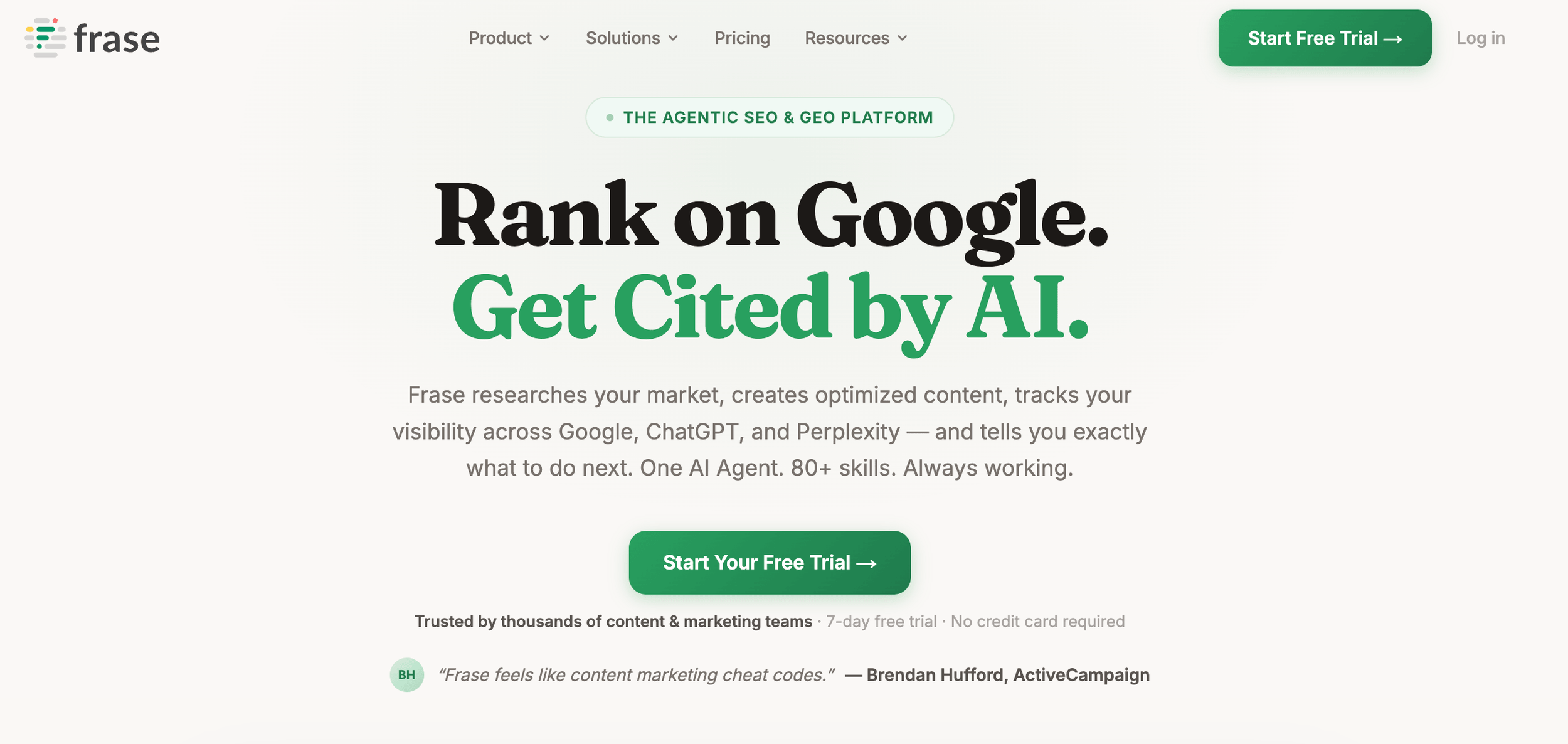
For researching, writing, and optimizing all in one place: Frase.io
This is the tool we keep coming back to, and for good reason. Frase does something most SEO tools don't; it combines keyword research, content briefing, and optimization into a single workflow. Type in your target topic and it instantly pulls together what the top-ranking pages are covering, what questions people are asking, and how your draft compares in real time as you write.
For creators who don't want to juggle five different tools, Frase is genuinely a game-changer. You can go from "I want to write about X" to a fully structured, optimized post without ever leaving the platform. It's particularly strong for identifying content gaps, the questions your audience is asking that your competitors aren't properly answering. That's where ranking opportunities actually live.
If you're starting out and want one SEO tool to learn first, make it Frase.
For tracking what's working: Google Search Console (it's free)
Before you spend a penny on anything else, get Google Search Console set up. It shows you exactly which posts are appearing in search, which keywords you're ranking for, and where you're losing clicks. It's free, it's directly from Google, and it's the most honest feedback loop you'll find. Use it to double down on what's already gaining traction.
For repurposing your blog into everything else: AI content tools
Over 90% of marketers now use AI tools somewhere in their workflow, and for creators, the biggest win is repurposing. Tools like ChatGPT or Claude can take a finished blog post and turn it into a week's worth of social captions, an email, or a video script outline in minutes. Write the blog once. Make it do five jobs.
Do creators still need blogs in 2026? Our honest take.
Blogging isn't a traffic hack anymore. It never really should have been. The creators who are winning with blogs in 2026 are treating them like long-term assets. They’re writing with real experience, answering the questions people need answers for, and using each post as the engine for everything else they create.
The good news? That approach also happens to be exactly what Google, AI search, and your actual audience all reward. Deep, helpful, specific content builds trust. And trust, whether someone clicks your affiliate link or signs up to your list, is what converts.
The lazy blogs died. The strategic ones didn't. Go be strategic.
Frequently Asked Questions
-
Not at all, and this is one of the biggest misconceptions about blogging. Consistency matters more than volume. One well-researched, properly optimized post per week (or even per fortnight) will outperform five rushed ones every time. Many of the best-performing blog posts driving traffic and affiliate revenue today were written months or years ago. Focus on quality and let the content compound over time.
-
Yes, and here's the thing most people miss: AI Overviews are built from well-structured, credible content. Good blogs. If you're writing with real experience, answering questions clearly, and going deeper than the surface level, you're creating exactly the kind of content that AI search wants to reference and cite. The creators losing clicks are the ones publishing generic, thin content. The ones winning are getting cited in the summaries themselves.
-
No. A platform like Squarespace gets you a professional-looking site without any technical headaches, and Google Search Console, which should be your first analytics tool, is completely free. Frase.io handles your keyword research, content briefs, and on-page optimization in one place, so you're not paying for five separate tools. The biggest investment is time and the willingness to write from genuine experience. That's what actually moves the needle in 2026.

Red 11 Media is an educational platform and creative studio focused on driving growth online through strategic content creation. We help creators, brands, and businesses understand how to build sustainable audiences across YouTube, podcasting, and long-form digital content.