
A Custom Ballistics Calculator That Became a Top Page
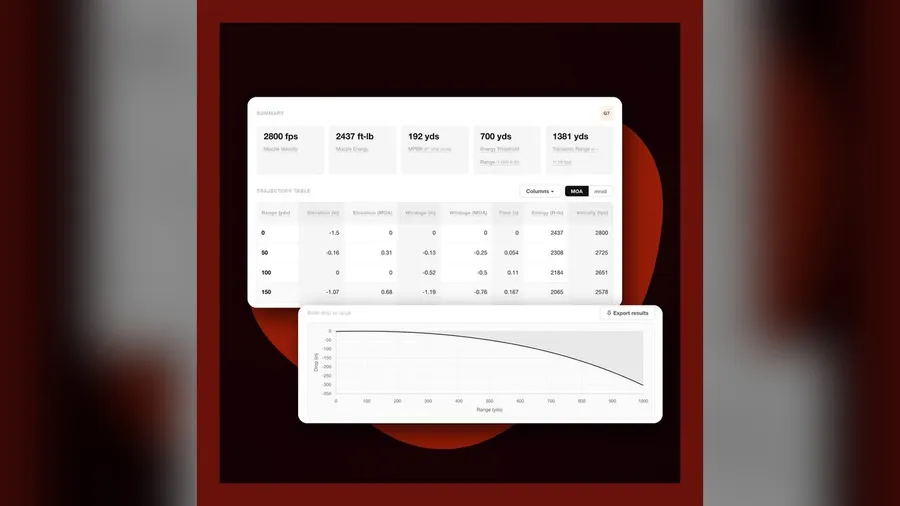
A free tool that does the work of a paid app.
Ron Spomer Outdoors has helped hunters and shooters for decades. Their audience kept asking the same questions: how far will this bullet drop at 500 yards, how much will the wind push it, and does it still have enough energy for an ethical shot? We built a free ballistics calculator on Ron’s website that answers those questions, so his readers don’t need a separate app.
Result so far: since it went live in June 2026, the calculator has become one of the top 6 pages on the Ron Spomer Outdoors website.
The challenge
Most free ballistics calculators fall into one of two groups:
- Manufacturer calculators. They only list the brand’s own bullets or loads.
- Simple web calculators. They leave out the things that matter at long range: altitude, shooting angle, the direction of the wind, and the difference between the pressure your weather meter reads and sea-level pressure.
Ron’s audience shoots every brand and hunts from sea level to the high mountains. They needed one tool that handled all of it and gave numbers they could trust.
Ron needed it too. When he makes a YouTube video or writes a blog post, he’s often looking up ballistics data, so the calculator had to work as a research tool for him, not just a page for his readers.
What we built
The calculator runs in the browser on Ron’s site. There’s nothing to download and no login.
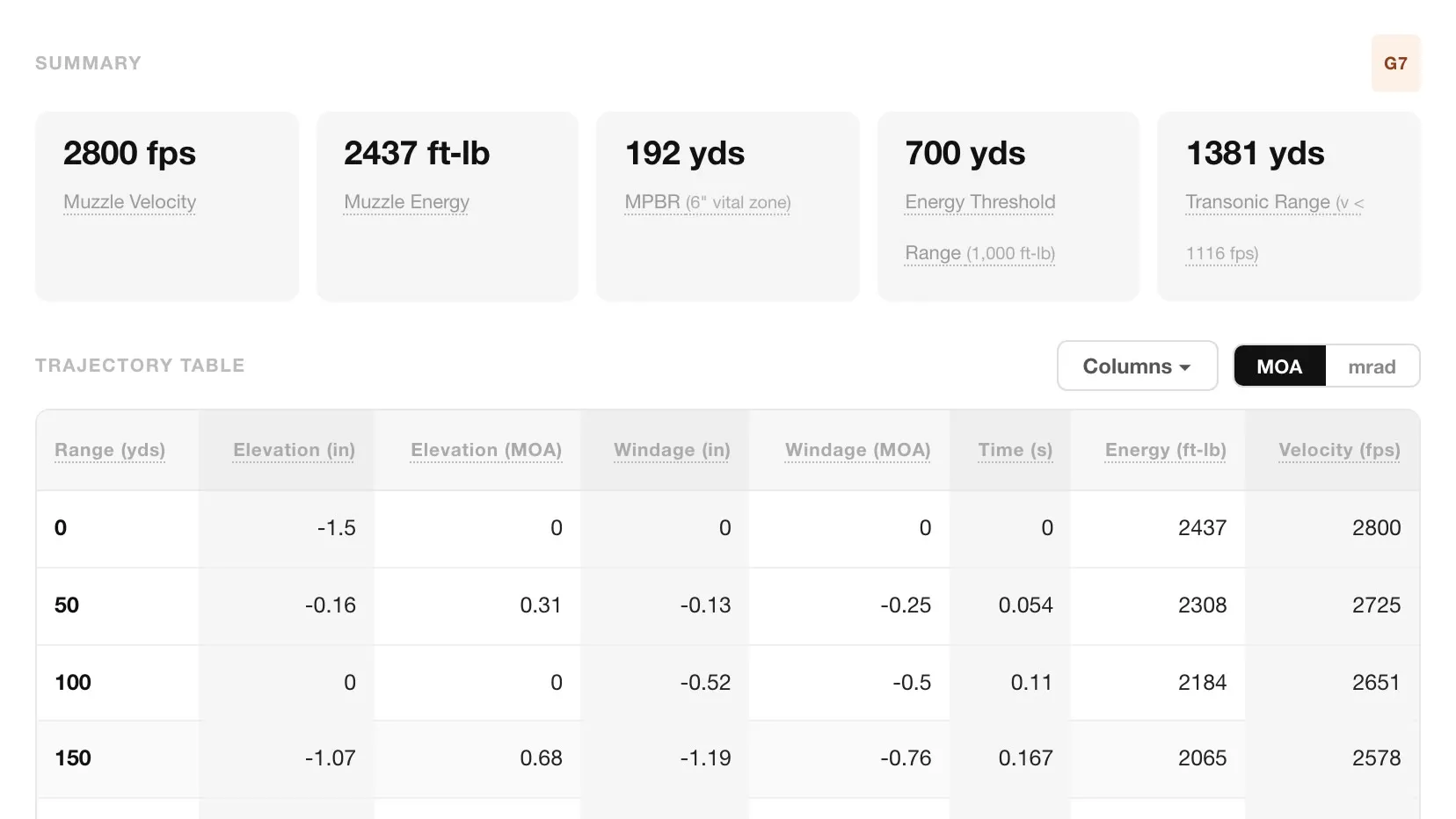
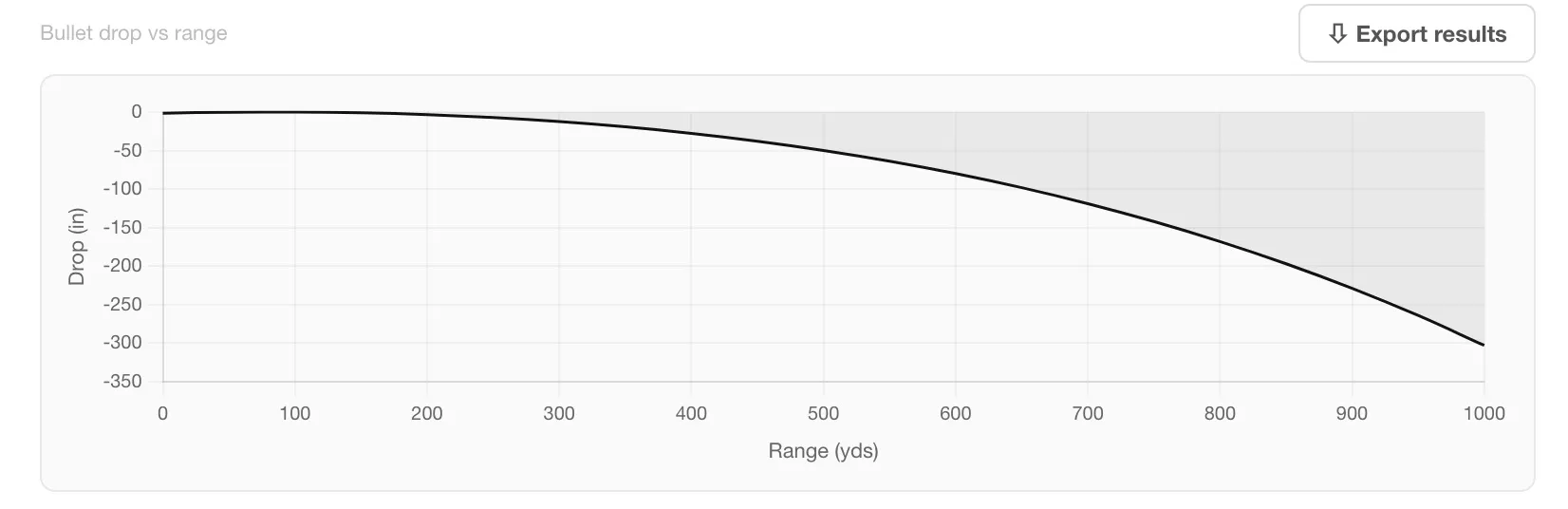
- Trajectory table: drop, wind drift, velocity and energy at every range step, in inches, MOA or mils.
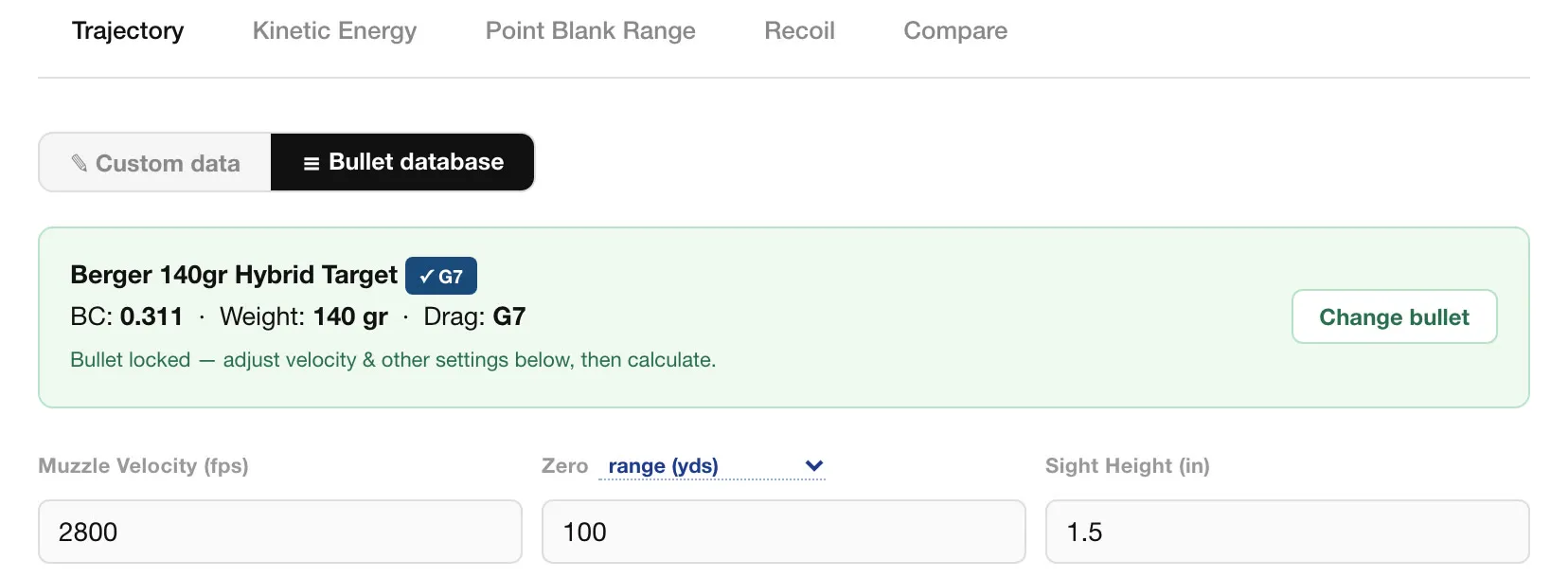
- A bullet database of 2,027 bullets from 12 makers, across 51 bullet diameters from .172 to .620. Every value was read from the maker’s own website or catalogs, and the sources are logged. Long boat-tail bullets use G7 ballistic coefficients where the maker publishes one, which is more accurate at long range.
- Real-world conditions: temperature, altitude, pressure, humidity, uphill or downhill angle, and wind speed and direction. In the US, “Use my location” fills in current weather from the National Weather Service and elevation from USGS, and you can enter pressure as either sea-level or at your location.
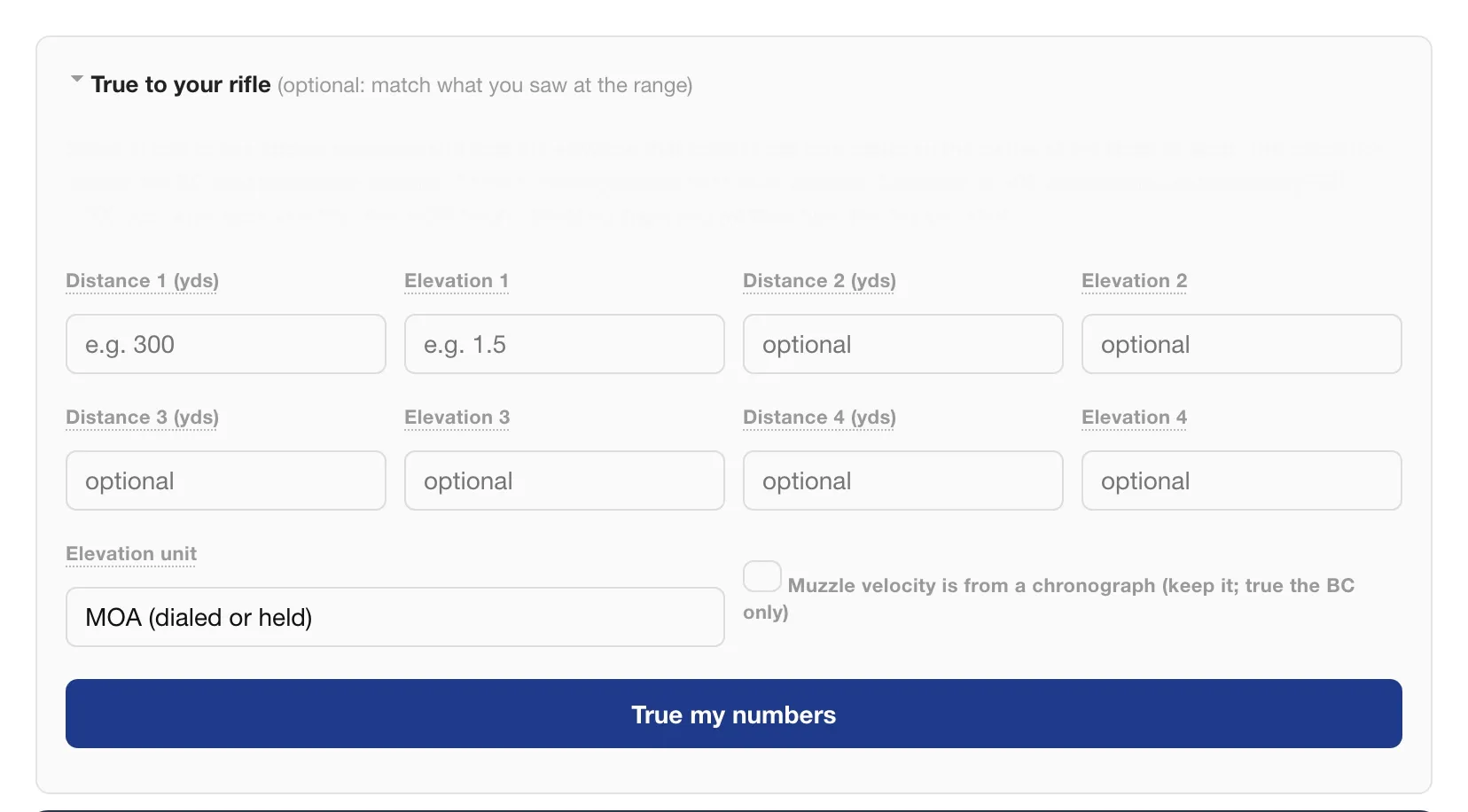
- “True to your rifle”: enter what your rifle actually did at up to four distances, and the calculator adjusts the bullet’s BC to match (it keeps your velocity when it comes from a chronograph). Published BCs often run a few percent optimistic, and this fixes it.
- Zero the way hunters actually sight in, including “sighted in 2.5 inches high at 100 yards.”
- More tools in the same place: point-blank range for a given vital zone, kinetic energy, recoil, and a Compare tab for two bullets side by side.
- Explanations on every field (hover or tap) and a column picker for the table.
- Exports built for Ron’s videos: a tall drop chart image, a 16:9 chart and table pages, so he can take a result straight into a YouTube video or blog post.
How we made sure it’s right
A ballistics calculator is only useful if hunters can trust it. So we audited it the way a skeptical shooter would:
- We rebuilt the data. Every bullet was checked against the maker’s own published numbers, and the database grew from 385 bullets to 2,027.
- We checked the math against the industry. With the same bullet and conditions, it agrees with Berger (Applied Ballistics), Federal and Shooters Calculator to within about 1% at 1,000 yards, and with the open-source py-ballisticcalc reference to within 0.2%.
- We tested 26 real-world conditions (altitude, temperature, humidity, pressure, shooting angle, wind) at 500 and 1,000 yards, and fixed every problem the tests found. One of them made thin mountain air count twice when you entered a weather-meter pressure reading, which could put a 1,000-yard shot about 30 inches off.
How it’s built
The whole calculator is one self-contained file that runs in the visitor’s browser, embedded directly on Ron’s Squarespace site. There’s no server to pay for, no accounts and nothing to maintain beyond the data. Under the hood it uses a standard point-mass trajectory model with the standard G1 to G8 drag tables, and it accounts for air getting thinner as the bullet climbs.
Why a tool instead of another article
An article answers one question once. A tool answers a different question for every visitor, every time they come back before a hunt. That’s why the calculator became one of the site’s most-visited pages, and it gives Ron’s audience a reason to come back to his site instead of a separate app. It also gives RSO a place to point hunters to what’s next, like Ron’s Complete Rifleman course.
That’s what we liked most about this project: one tool gives real value to Ron’s audience and to Ron himself, every time he sits down to plan a video.
Want a tool like this for your website?
We build custom calculators, quizzes and interactive tools that answer your customers’ questions and bring them back to your site. Tell us what you have in mind.