Why Creators Choose Soundstripe for Royalty-Free Music
Soundstripe is a royalty-free music platform built for content creators who need reliable audio without licensing complications. Plans start at $9.99 monthly for the Student tier, $19.99 for Pro covering YouTube monetisation and commercial work, and $33.99 for Pro Plus including video clips and B-roll. Unlimited downloads, copyright-safe licensing, intuitive search by mood and genre, and integrations with Adobe Premiere Pro make it ideal for YouTubers, podcasters, and freelancers.
Music isn’t just background noise — it sets the tone for your entire video. The right track adds emotion, momentum, and polish. The wrong one? It can feel off, distract your audience, or worse, land you with a copyright claim that tanks monetization or reach.
For creators publishing consistently, music becomes a real bottleneck. You need tracks that sound professional, are easy to license, and won’t come back to haunt you months later. That’s the exact problem Soundstripe is built to solve.
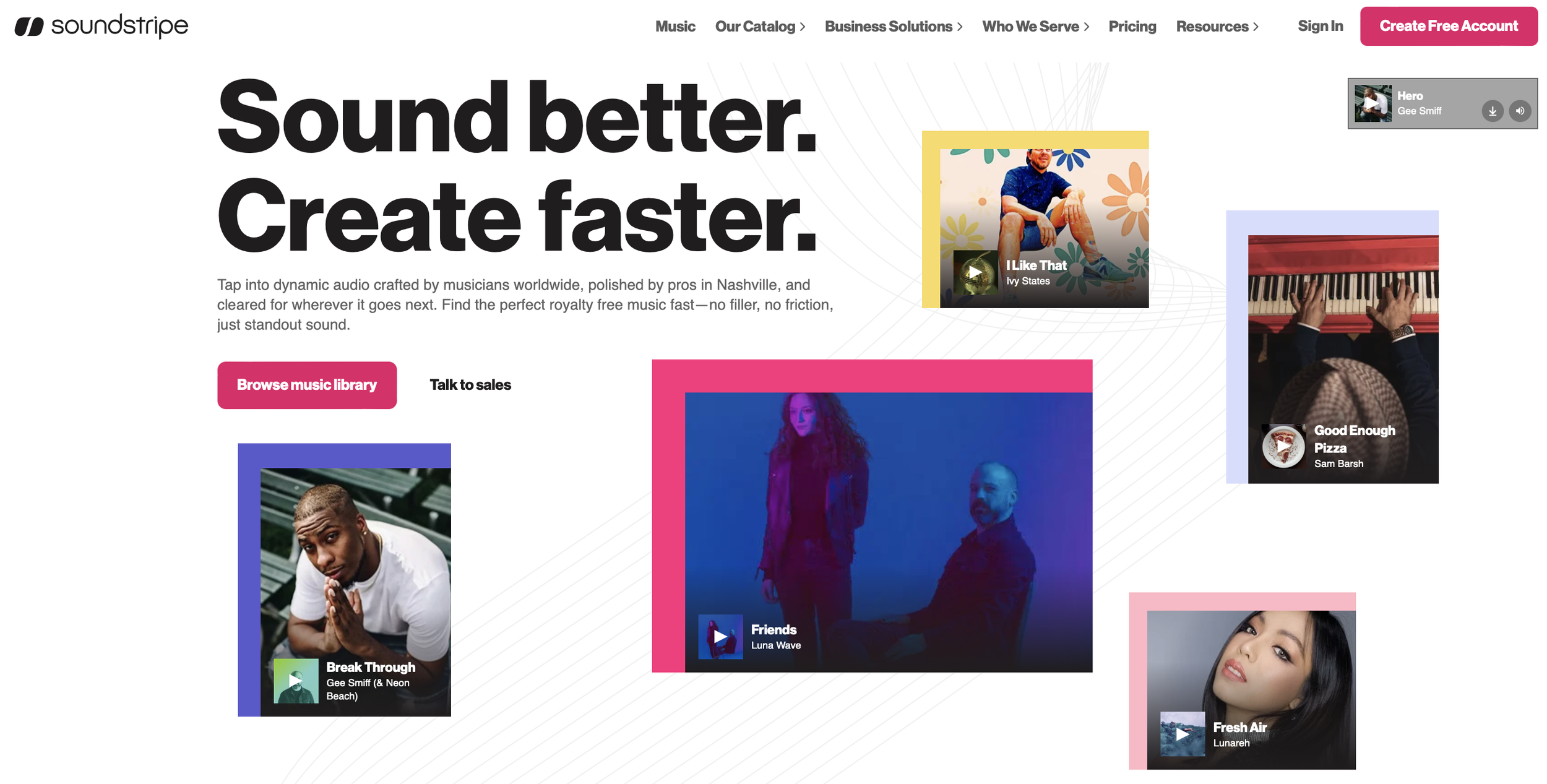
Soundstripe is a royalty-free music and asset platform designed for modern content creators who want reliable, no-stress audio without slowing down their workflow. Instead of dealing with confusing licenses, one-off purchases, or Content ID anxiety, you get unlimited access to curated music, sound effects, and — on higher tiers — video clips. Whether you’re a YouTuber, podcaster, freelancer, or brand pumping out regular content, Soundstripe positions itself as a clean, creator-friendly solution to a historically frustrating part of the process.
Soundstripe Pricing Plans and Benefits
Soundstripe’s pricing is designed to grow with you, which is one of its biggest strengths. Rather than forcing every content creator into a single expensive plan, it offers clear tiers that make sense at different stages of content creation.
The Student subscription plan starts around $9.99 per month and includes access to Soundstripe’s royalty-free music and sound effects library. It’s a solid entry point for students, new creators, or anyone testing the waters before committing to a larger budget.
The Pro plan, priced at roughly $19.99 per month when billed annually, is where Soundstripe really starts to shine for content creators. This plan is built for creators who publish consistently and need coverage for monetized YouTube channel video content, social media videos, podcasts, and most standard commercial use cases. For many creators, this tier hits the sweet spot between price and flexibility.
If you want more than just audio, the Pro Plus plan comes in at about $33.99 per month when billed annually. Along with music and sound effects, this tier unlocks video clips and B-roll, plus expanded licensing. It’s especially useful for editors, agencies, or brands that want multiple asset types without stacking subscriptions.
For businesses and enterprise teams, Soundstripe also offers custom plans starting around $999 per year, built for multi-user access, higher usage limits, and more flexible licensing terms.
Across every tier, Soundstripe’s unlimited-download model stands out. You’re never paying per track or second-guessing how often you can use an asset, which makes experimenting creatively a lot easier.
How Soundstripe Simplifies Music Licensing
Soundstripe works well because it doesn’t overcomplicate things.
The platform isn’t trying to be everything at once. It’s focused on delivering high-quality audio and assets that are easy to find, easy to license, and safe to use.
At its core, Soundstripe provides a curated library of royalty-free music, sound effects, and video clips that are cleared for social platforms like YouTube, Instagram, TikTok, podcasts, and client projects (depending on your plan). It works within tools you're likely already using like Premiere Pro, Twitch and Adobe Express. The licensing is straightforward, and you don’t need a law degree to understand what you’re allowed to do like you may have experienced on other stock music sites.
In real-world use, this translates to faster edits and fewer headaches. Instead of bouncing between sites or second-guessing whether a track will trigger a claim, you can download what you need and move on. If you’re producing content at scale, that reliability adds up fast.
Best Features Overview
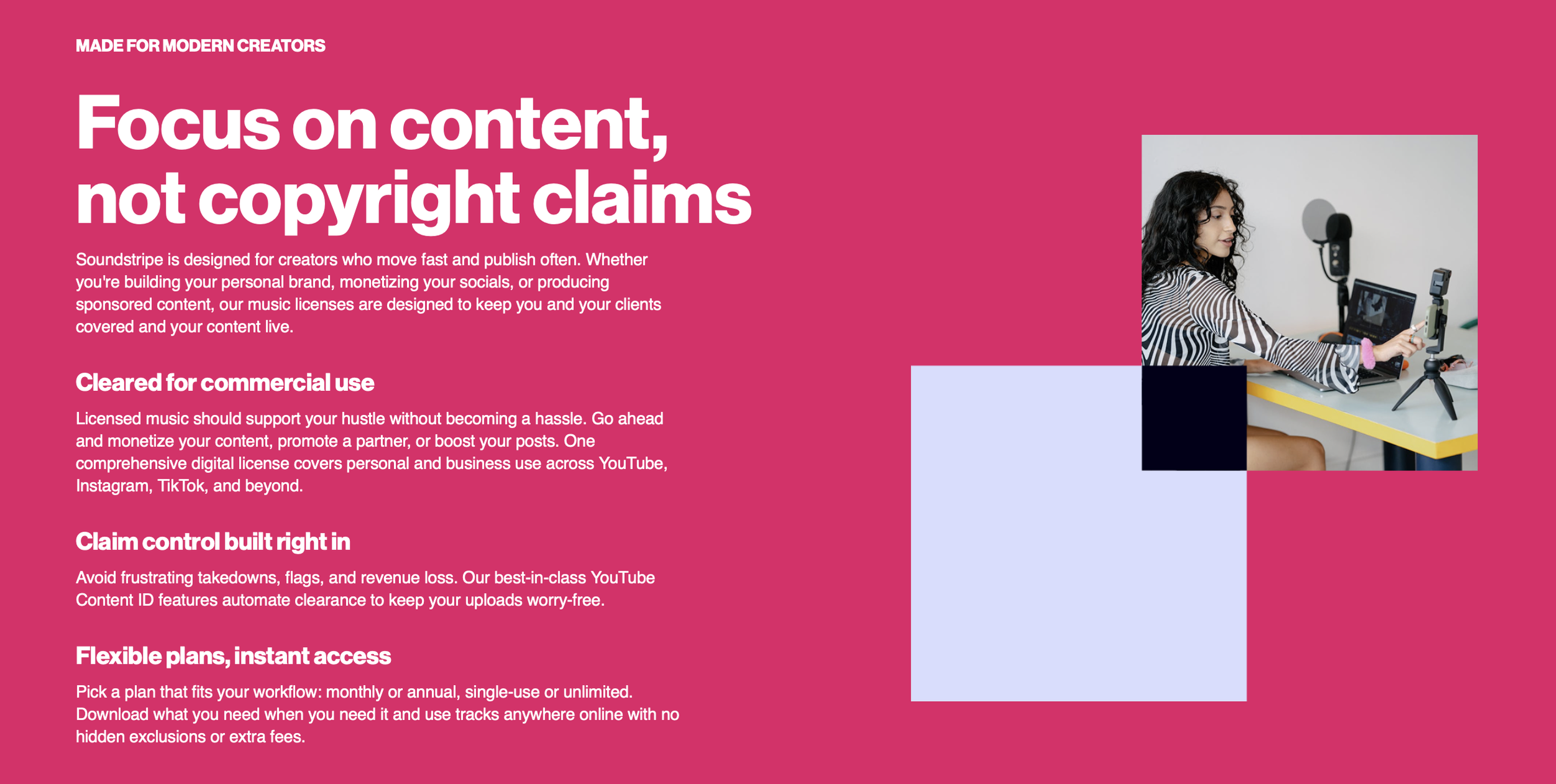
One of Soundstripe’s biggest selling points is its monetization-safe, royalty-free music library. Every track in the music catalog is cleared under a simple subscription license, so you don’t have to worry about YouTube Content ID claims for copyright infringement, demonetization, or videos getting flagged months after publishing. For YouTubers and brands relying on long-term monetization, that peace of mind for music licensing matters.
Music discovery is another area where Soundstripe shines. Tracks are organized by mood, genre, energy, tempo, and use case — not just technical music jargon. Instead of guessing, you can browse categories like cinematic, chill, uplifting, or high energy. Pre-built playlists make it even easier to find music for common formats like vlogs, ads, podcasts, or storytelling videos. This is especially helpful if you’re not musically trained but still want your content to feel intentional.
Beyond music, Soundstripe adds value with a growing sound effects library, including transitions, impacts, ambiences, and textures that help bring edits to life. Higher-tier plans also include video clips and B-roll, turning Soundstripe into a more complete post-production resource. Having multiple asset types in one place simplifies your workflow and cuts down on subscription sprawl. This is especially useful when working on multimedia projects.
Best Features Compared to Competitors
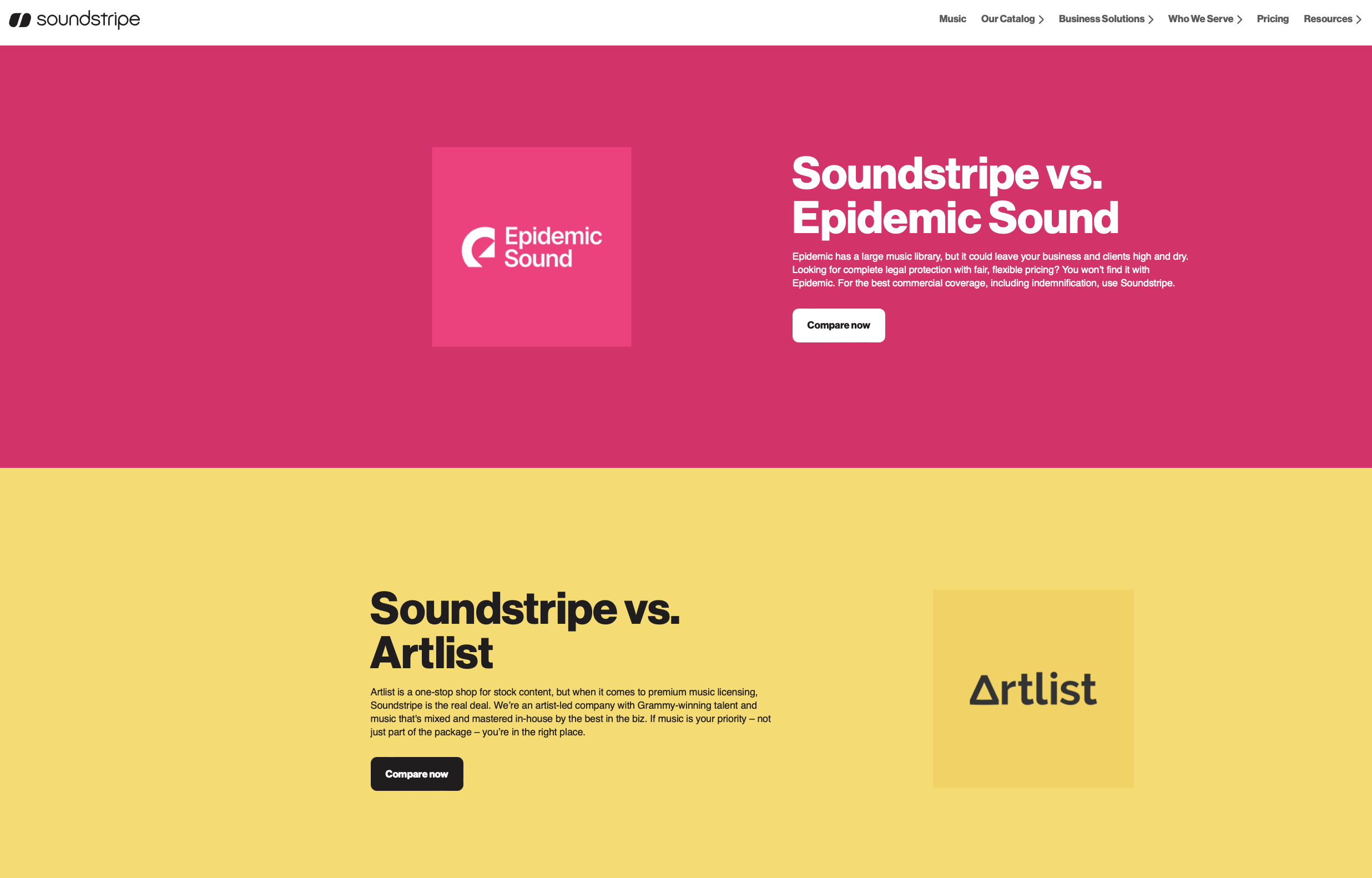
Soundstripe competes most directly with platforms like Epidemic Sound, Artlist, and AudioJungle. Epidemic Sound is known for its massive catalog and deep platform integrations, but it often comes at a higher cost — especially for creators juggling multiple channels or client work. Artlist leans heavily into cinematic, film-style music, which is great for high-production projects but can feel less flexible for everyday creator content. AudioJungle’s pay-per-track model offers flexibility, but licensing is more complex and costs add up quickly for frequent creators.
Soundstripe’s unlimited-download subscription and clear licensing make it more approachable for most creators.
When it comes to discovery, Epidemic Sound and Artlist are strong, but Soundstripe stands out for speed and usability. The filters and playlists feel intentionally designed for creators who need a usable track quickly — not for people who want to browse endlessly.
As an all-in-one asset library, Soundstripe competes with platforms like Motion Array, Envato Elements, and Artlist Max. Motion Array offers templates and plugins, and Envato provides sheer volume. Soundstripe’s edge is focus. The library feels cleaner, less overwhelming, and better aligned with creators who want quality assets without digging through thousands of irrelevant files.
Ideal Creators for Soundstripe Service
Soundstripe is a great fit for creators who prioritize speed, simplicity, and reliability over endless customization. It’s ideal for YouTubers, social media creators, podcasters, freelancers, and small teams producing content on a consistent schedule.
The creators who benefit most from Soundstripe value peace of mind that comes from having a clear licensing model. If you don’t want to worry about copyright coverage, confusing licenses, or whether a track will cause problems later, Soundstripe delivers consistency you can rely on. It’s also a strong option for client work, where clean licensing and professional assets aren’t optional.
Is It Worth the Money / Should You Buy It?
If you publish content regularly, Soundstripe is absolutely worth the investment.
It saves time during editing, removes legal uncertainty, and eliminates the need to buy individual tracks or juggle multiple subscriptions. While it may not have the biggest library on the market, the combination of quality, usability, and licensing clarity makes it a strong value overall.
Why Soundstripe Is Ideal for Creators
If your content relies on background music and sound effects, Soundstripe offers a balanced mix of quality, simplicity, and affordability. It’s a practical, creator-first solution that lets you spend less time searching for assets — and more time actually creating.
Frequently Asked Questions
-
Soundstripe is a subscription-based royalty-free music and creative asset platform built for content creators. Subscribers gain unlimited access to a curated library of music tracks, sound effects, and video clips depending on plan tier. Licensing is straightforward, covering YouTube monetisation, social media, podcasts, and client work without copyright complications. The platform integrates with editing software like Adobe Premiere Pro, Twitch, and Adobe Express, simplifying creator workflows significantly.
-
Soundstripe offers tiered pricing starting at $9.99 per month for the Student plan, $19.99 monthly for the Pro plan covering most creators, and $33.99 monthly for Pro Plus including video clips and B-roll. Annual billing reduces costs across all tiers. Business and enterprise plans start around $999 per year for multi-user access and expanded licensing. All paid tiers include unlimited downloads, eliminating per-track fees common on competing platforms.
-
Yes, Soundstripe is fully safe for YouTube monetisation. Every track in the catalogue is cleared under a simple subscription license, preventing Content ID copyright claims and demonetisation issues. Creators can publish content using Soundstripe music with confidence, knowing automated YouTube systems won't flag videos. The platform's licensing model provides ongoing protection as long as your subscription remains active during the time of publishing.
-
Soundstripe, Epidemic Sound, and Artlist all offer strong royalty-free music libraries, but with different strengths. Epidemic Sound has the largest catalogue (50,000+ tracks). Artlist provides flexible commercial licensing including broadcast and Artlist Max bundles for footage and templates. Soundstripe excels at usability, intuitive search, and clean licensing across creator-focused tiers. The right choice depends on whether you prioritise library size, licensing breadth, or workflow simplicity.
-
Soundstripe is best suited for YouTubers, social media creators, podcasters, freelancers, and small content teams who publish consistently and need reliable music without licensing complications. The platform suits creators who prioritise speed and simplicity over endless customisation. Pro Plus tiers add value for editors and agencies wanting video clips alongside music in one subscription. Soundstripe also works well for client work where clean licensing matters significantly.